
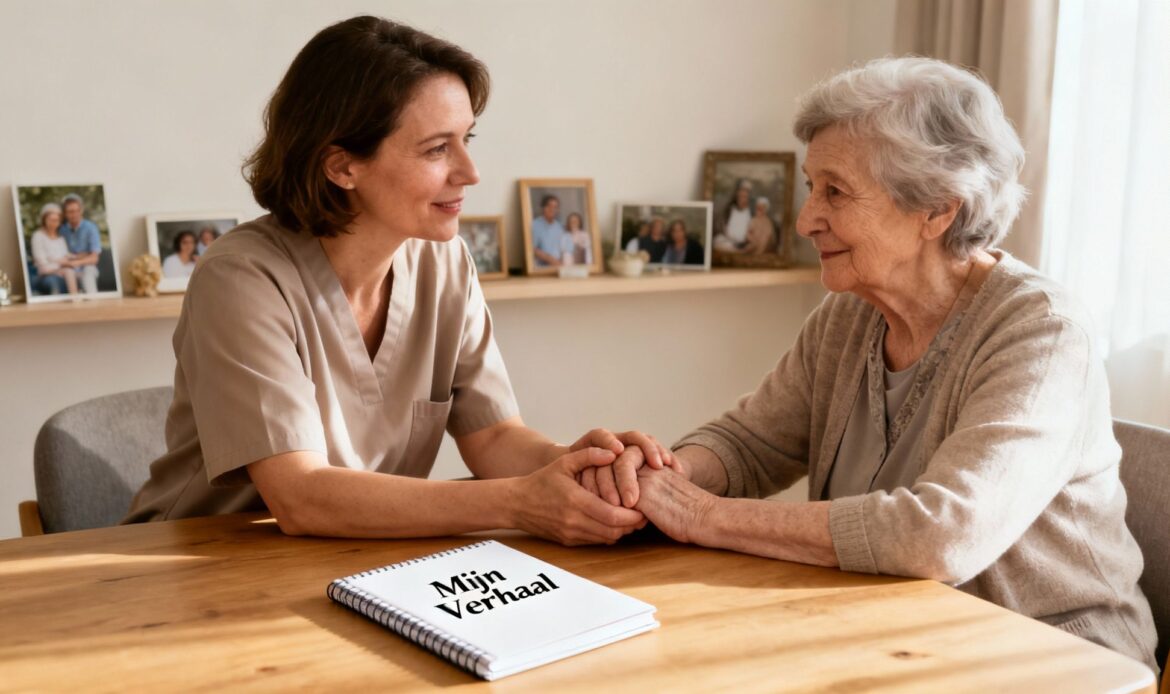
A dementia diagnosis changes everything — for the person who receives it and for those around them. Coping with dementia starts with recognising the early signs, creating a safe foundation and opening a conversation with the people in your life.
First steps after a dementia diagnosis
The diagnosis marks a turning point that requires both emotional processing and proactive planning. Early recognition of subtle signals — such as memory problems or behavioural changes — enables targeted support.
Creating a safe foundation
A predictable environment with fixed routines has a positive effect on wellbeing. Document the person's life story, values and wishes to preserve their identity as the illness progresses. Tools such as SocialScan by Registor help caregivers map the care network and maintain an overview, so you are not overwhelmed by the situation.
Communicating effectively as behaviour changes
Behavioural changes — agitation or apathy — are signals pointing to underlying pain, fear, discomfort or confusion. Listening to body language and underlying emotions — rather than just words — helps you understand what someone truly needs.
Practical tips that actually work
- Keep messages short and simple: use clear, concise sentences and present one idea at a time
- Simplify choices: yes/no questions work better than open questions that require a lot of cognitive effort
- Use non-verbal communication: smiling, eye contact and a gentle touch often communicate more effectively than long conversations
Around 310,000 people in the Netherlands currently live with dementia. This number is expected to double within 25 years. Effective communication is therefore becoming increasingly important.
A calm, positive approach creates a sense of safety. This improves the immediate interaction and strengthens the relationship in the long term.
Maintaining control of the care network and collaboration
As care intensifies, the support network expands: family, neighbours, home care professionals and case managers. Without good organisation, misunderstandings arise and caregivers become overloaded.
Make the network visible
Mapping the social network shows both the strengths and the gaps in the support. SocialScan helps organise contacts clearly — from neighbours to nurses — and enables task distribution so that not everything falls on one person.
The goal is not necessarily to find more helpers, but to deploy the right people in the right way. This helps caregivers maintain an overview and build sustainable support.
Practical self-care for caregivers
Providing care is demanding and can be exhausting. Self-care for the caregiver is not a luxury — it is essential for sustained, loving care.
Finding balance and accepting help
Women disproportionately bear the burden of dementia care, a trend showing no signs of improvement. Better task distribution through tools like SocialScan provides the breathing space needed. Respite care and peer support groups offer additional support. Recognise the warning signs of overload: persistent fatigue, irritability, social withdrawal.
Organising administrative and legal matters in time
Arranging legal and administrative matters early prevents stress and ensures the person's wishes are respected when they can no longer make independent decisions.
Key documents and powers of attorney
- Care authorisation — designate who makes medical decisions
- Financial power of attorney — grant someone authority over banking and asset management
- Digital safe — store documents, passwords and contact details securely
Frequently asked questions about coping with dementia
What if my loved one no longer recognises me?
Non-recognition is one of the most painful experiences for caregivers. Do not insist on recognition, but remain calm and introduce yourself quietly. Focus on creating a sense of safety and trust, not on demanding acknowledgement.
How do I deal with disrupted nights?
A fixed evening routine helps: calming music, herbal tea, dimmed lighting. Ensure adequate movement and daylight during the day. Consult a doctor if sleep problems persist.
My loved one accuses me of all sorts of things — what now?
Accusations arise from the illness, not from malice. Arguing is pointless. Acknowledge the underlying emotion ("I understand you are worried about your wallet") and gently redirect attention, for example with a cup of coffee.